Patterns
In this post I am collecting interesting patterns from graphs and charts that I have come across (usually, but not always, at work).
80 characters, 32 millimeters, and other anachronisms
We use 80 characters per line (CPL) in lots of software (TTY defaults, git standards, etc) because of widespread adoption of DEC's VT100 and similar terminals. These, in turn, use 80 characters because of a 1928 punch card format for IBM used in the US Census.
If you have IKEA furniture, like the Billy bookcase, you have a 32mm cabinet. We use 32mm centre-distance in cupboards and cabinets, with 5 or 8mm diameter, and a 37mm front margin. Allegedly, the 32mm comes from the centre spacing of common line drilling jigs.
First the world shapes the tool, then the tool shapes the world.
Sawtooth connections
Below we have a 12h graph and we can see roughly every hour a spike in new connections, unrelated to the (much higher volume) number of requests.
The number of connections that spikes every dwindles with every period.
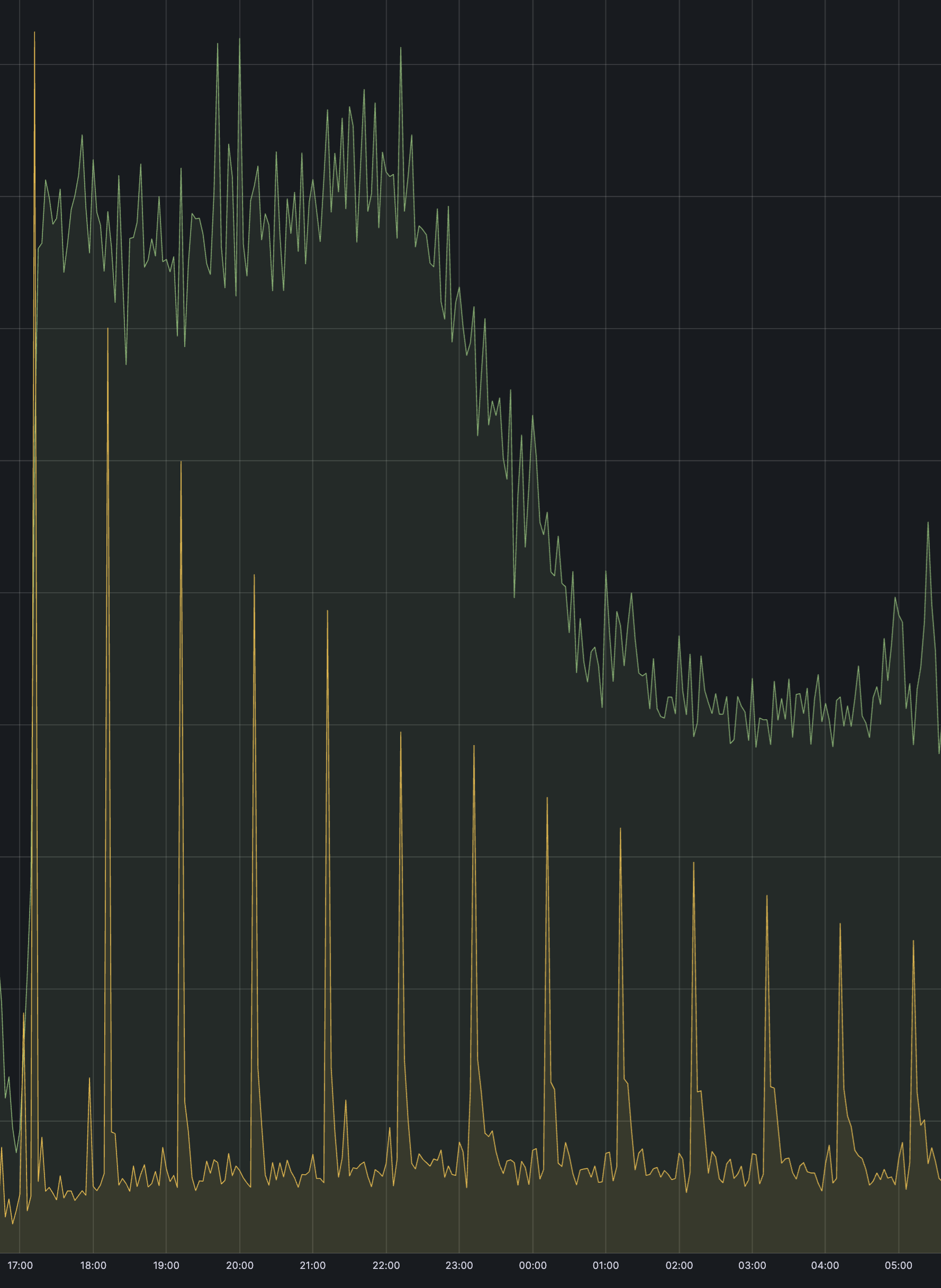
At first it appears peculiar, the dwindling amplitude of periodic connections.
These are connections which timed out after an hour and are re-established. The initial spike in connections is due to a sudden spike in usage (a periodic task, using multiple connections). These connections are re-established after the idle timeout.
Damped sine wave failures
In this example we have a chart of 48h, with three peaks, and a damped sine wave pattern of failures.
Similar to the sawtooth pattern above, but even more sinusoidal. In this case the retry mechanism has a jitter which more predictably spreads retries.
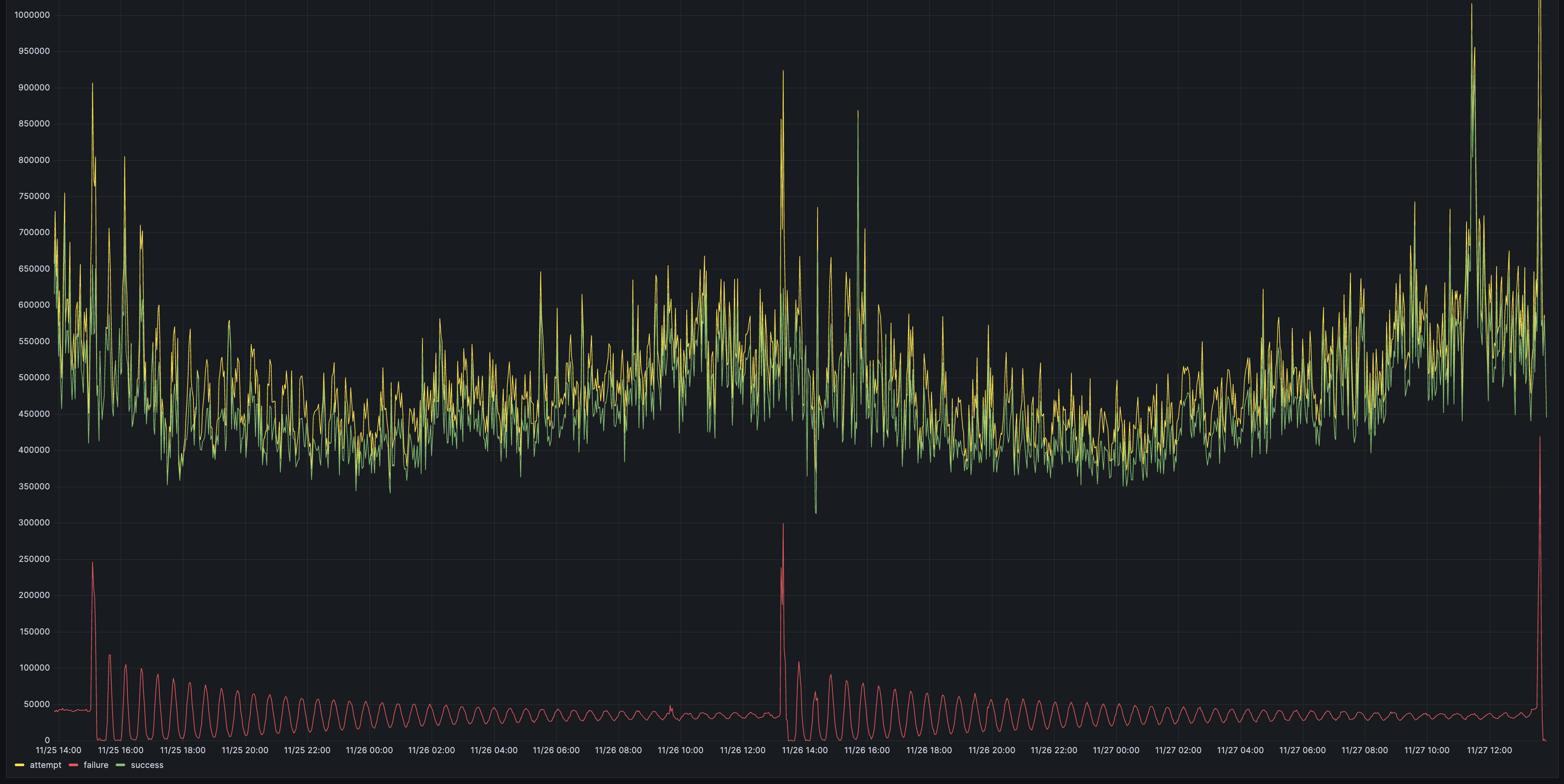
This level of failure for this system is normal, as each server does load shedding to distribute load better, these failures represent either rejected connections for load distribution, or session expiries. What is abnormal here is that start time of all the servers is synced, so initial connections and expiries create coincidences of large load.